Two Brothers, A Peace Treaty & Root Rot

Another example of history in our backyards:
paz-blog_4642.jpg

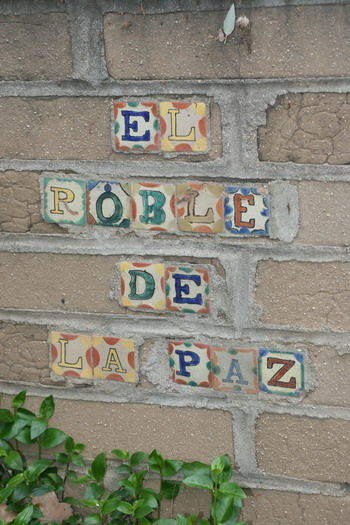
According to some this is the place where the history of modern California began – at Verdugo Adobe in present day Glendale.
sign-blog_4639.jpg

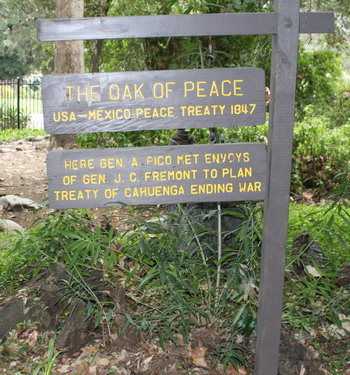
The preliminary talks to the actual peace treaty (signed two days later) which ended the war between the US and Mexico were held under an oak tree, later called “The Oak of Peace” or “El Roble de la Paz.” Interestingly enough two brothers were involved in those talks about surrender of the Mexicans to the U.S. forces under the command of John Fremont: Jesus Pico, acting on behalf of the U.S. government and Andres Pico, commander of the Mexican Army.

The tree itself isn’t there any longer – in 1987 it had to be taken down due to root rot.

Well, at least it did not get chopped down for firewood or to make room for an office building.
Google For Googie

Most architecture buffs know what Googie stands for – a unique form of architecture, very much of Southern California and until quite recently very much undervalued.

The problem simply seems to be that many architectural styles only become acknowledged for what they are – or where – once they are gone. Which is sad, but not rare and certainly not a problem found in Los Angeles alone.

Anyway, there are still examples of buildings in this style around. Some of the more well know ones are the Bob’s Big Boy in Burbank, the few Norm’s Diners left, Johnie’s on Wilshire (closed and used for filming only). There are more and there are many groups active in keeping the still existing examples of a time intact when architecture soared, together with the hopes and dreams of Americans for a better future in modern times.

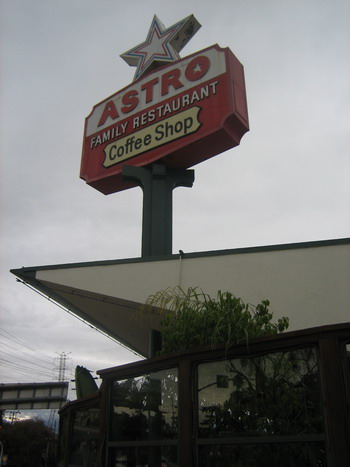
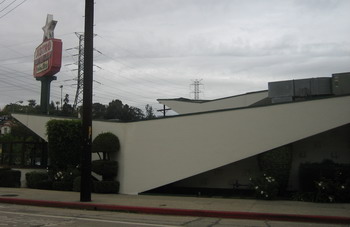
One of those examples a bit off the trodden path and under the radar can be seen here:

astro_1_blog_2140.jpg

astr_2_blog_2142.jpg

This building is the work of the notable architecture team Armet and Davis. Originally it was Donly’s, then Conrad’s, today it is the Astro Family  Restaurant.

All the elements of classic Googie are assembled: the neon sign with the star shape, the upward sloping roof, the acute angles, a lot of glass and bright, flashy colors inside (not seen here). For the architecture lover and the late, late bird (Astro’s is open 24 hours) I can recommend the place. Food lovers should beware and avoid it.

Don't Raze Them – Reuse Them

Los Angeles changes constantly. Buildings disappear, new structures rise; sadly, this change is not always for the better.

Landmark buildings get help – sometimes. They escape the wrecking ball, get renovated, are restored to their former beauty and put back into business. Examples can be seen all over the city and let one imagine what certain areas of Los Angeles once must have looked like.

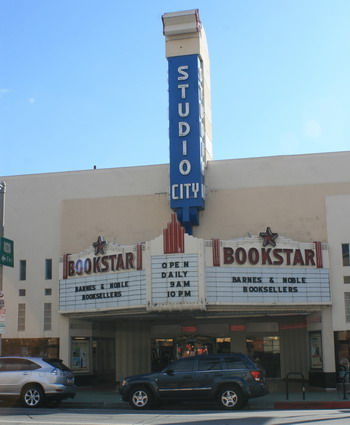
Lesser structures fare much worse. It takes a lot of community effort to first prevent their being demolished and then even more of an effort to find some use for the building plus the funds for renovation. One example is this former cinema in Studio City which is now a Barnes & Noble book store:

cinema-bookstore-blog-4460.jpg

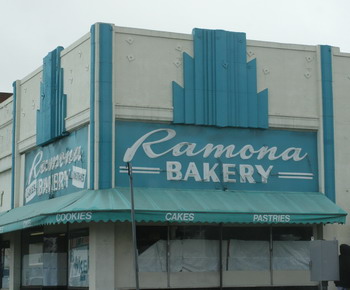
Whether this former bakery in San Pedro with its 71-year history will find a new life seems doubtful. Maybe in a year some soulless structure will rise on this corner and another example of ’30s decor will be gone forever.

ramona-bakery_blog-4043.jpg